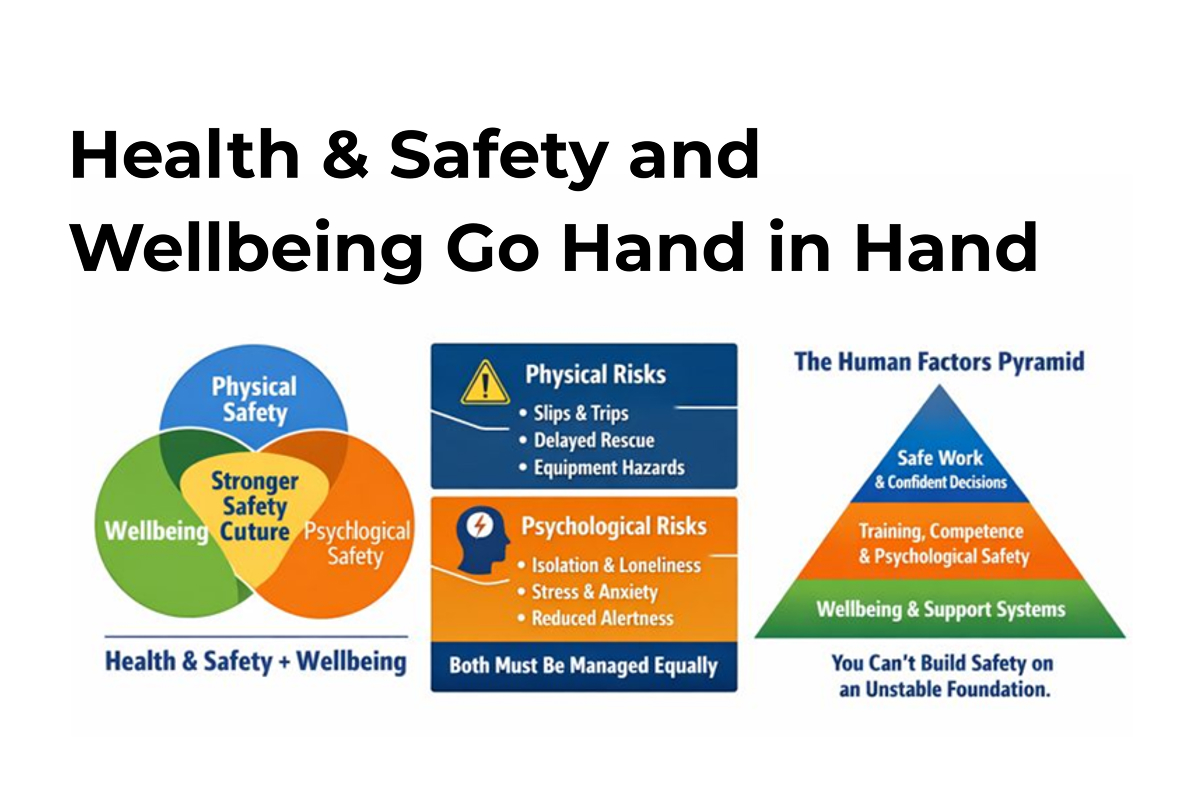
In Health & Safety it is easy to focus on the visible hazards, the equipment we maintain, the procedures we follow, the environments we work in. But the reality is this: safe work doesn’t begin with a risk assessment; it begins with people. Their mindset, their wellbeing, their confidence, and the support systems around them all contribute directly to safety outcomes.
As workplace responsibilities evolve, the link between traditional Health & Safety and broader wellbeing has become impossible to ignore. Regulators like the Health and Safety Executive (HSE) make it clear that employers have a duty to protect not only the physical safety of their workforce, but also their health and welfare under the Health and Safety at Work etc. Act 1974. That includes understanding how psychological factors affect people’s ability to carry out work safely.
It’s Not Just About Physical Risks – You need to Consider Human Behaviour
Take lone working as an example. The physical risks are well documented, delayed help, potential exposure to hazardous tasks, limited support in emergencies. But what often goes unnoticed are the psychological risks:
- Reduced confidence when facing unexpected situations
- Heightened stress from working without immediate support
- Slower decision-making when unsure
- Feelings of isolation, which can impact judgement and hazard awareness
These human factors influence safety just as significantly as mechanical or environmental risks. When someone is worried, stressed, or unsure, it becomes far easier for something to go wrong, even in routine tasks.
This is why wellbeing is not an add-on. It must be part of your H&S infrastructure. Psychological safety, culture, communication, and emotional resilience are as important to incident prevention as PPE or permits to work.
Psychological Safety as a Core Business Value
Psychological safety means people feel comfortable to:
- Ask questions
- Admit when they are unsure
- Raise concerns without fear of blame
- Pause a job if something doesn’t feel right
This is the foundation of a mature, proactive safety culture. When people feel supported and valued, they are far more likely to speak up early, long before a risk becomes an incident.
Embedding wellbeing as a core value means we:
- Train leaders to recognise signs of stress or struggling
- Design work patterns that support human performance
- Give lone workers meaningful support and regular check-ins
- Create a culture where mental and emotional wellbeing are recognised as legitimate safety factors
- Provide the right training, tools, and guidance for every role — admin or engineer
When the organisation invests in people’s wellbeing, safety improves, performance improves, retention improves and everyone benefits. FACT!
Looking After People Is Looking After Safety
This is not soft science, It is evidence-based. Whether it is stress, lack of confidence, poor communication, or simply feeling isolated, these factors influence human reliability.
And human reliability is at the heart of every safe workplace.
Even occasional fatigue or stress (covered elsewhere in this newsletter) can compromise performance, which is why wellbeing, workload design, and cultural support are fundamental safety controls.
When wellbeing becomes part of your core operational framework, not a one-off initiative, you create a workplace where people thrive, and thriving people work safely.
Strong Safety Cultures Start With Strong Leaders
Do your managers know how to spot early signs of stress, isolation, or unsafe working behaviours? If not, we have a number of courses available on line to support you in your journey to compliance or reach out and we can link you up with suitable training for your needs.